Kashi Yatra Tradition: The Groom's Epic Pre-Wedding Walk
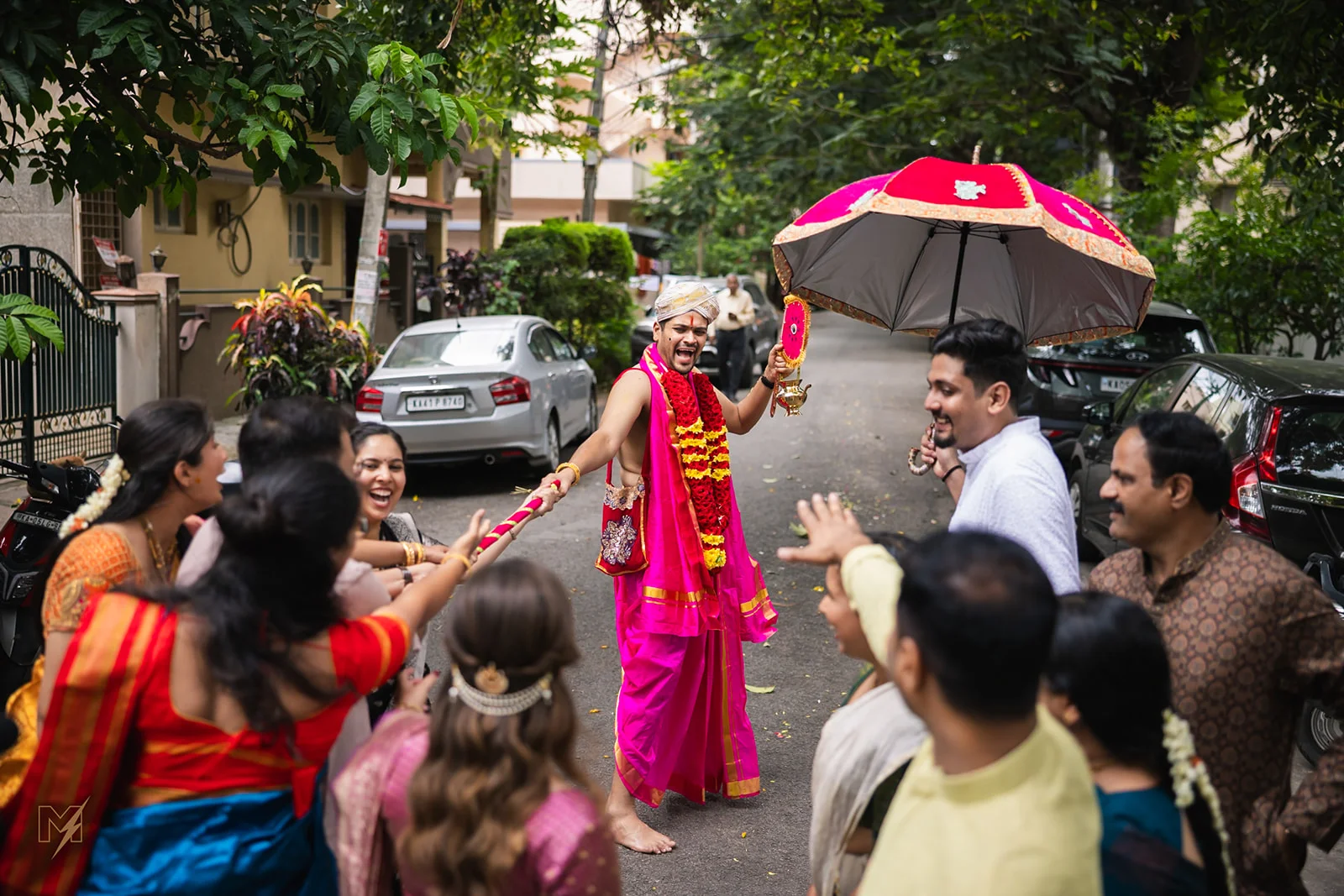
Imagine a groom dressed in traditional wedding attire, holding an umbrella, carrying a walking stick, and preparing to leave for Kashi instead of getting married! Sounds unusual, doesn't it? But this is one of the most interesting and entertaining traditions in a traditional South Indian Hindu wedding Known as Kashi Yatra, this playful pre wedding ritual brings together humour, family bonds, and a beautiful message about life's choices. While the groom appears determined to leave behind worldly responsibilities and pursue spiritual knowledge, the bride's father steps in with a proposal that changes his mind. But is this just a fun wedding tradition, or does it carry a deeper meaning? Let's discover the story and significance behind Kashi Yatra.
What Is Kashi Yatra?
Kashi Yatra is a traditional pre wedding ritual observed in several South Indian Hindu wedding communities, particularly among Tamil Brahmin families.
The word 'Kashi' refers to Varanasi, one of the most sacred pilgrimage destinations in Hinduism, while 'Yatra' means journey or pilgrimage.
The ritual symbolically portrays the groom deciding to leave his worldly life behind and travel to Kashi in search of spiritual knowledge and liberation.
However, before he begins his journey, the bride's father intervenes and persuades him to reconsider his decision. He offers his daughter's hand in marriage, explaining that the groom can embrace family life while continuing to fulfil his spiritual and personal responsibilities.
The groom eventually accepts the proposal and returns to participate in the wedding ceremony.
What begins as a playful departure becomes a meaningful reminder of the balance between spiritual aspirations and family responsibilities.
Why Does the Groom Carry an Umbrella and Walking Stick?
One of the most interesting parts of Kashi Yatra is the groom's appearance during the ritual.
He traditionally carries a few symbolic belongings, such as:
1. Umbrella: Represents the preparations for a journey and protection along the way.
2. Walking Stick: Symbolises the journey ahead and the determination to pursue a chosen path.
3. Sandals: Represent readiness to travel and leave behind the comforts of everyday life.
4. Books or Other Traditional Items: In some communities, the groom carries books or other objects associated with learning and spiritual pursuit.
These items help create the appearance of a pilgrim preparing for a long journey. The groom's traditional wedding attire, combined with these belongings, makes the ceremony even more memorable.
The exact objects and customs may differ depending on the family's regional and community traditions.
What Happens During the Kashi Yatra Ceremony?
Kashi Yatra is not just about the groom's symbolic departure; it is also a beautiful display of family traditions and wedding customs.
In many Tamil Brahmin weddings, the bride's brother plays an interesting role in this ceremony. He may accompany the groom or participate in welcoming him back, depending on the family's customs. This adds another layer of warmth and involvement between the two families.
The ritual also has a lovely connection with the idea of Grihastha Ashrama, the householder stage of life. In Hindu philosophy, this stage is associated with fulfilling responsibilities towards family and society while continuing to uphold spiritual values.
Once the groom agrees to embrace married life, he is welcomed back into the wedding proceedings. The ceremony often leads into the next wedding rituals, bringing the bride and groom closer to their much awaited union.
What makes Kashi Yatra particularly special is how it combines philosophical meaning with a light-hearted family celebration. It is a reminder that traditions need not always be solemn; sometimes, their most beautiful messages come wrapped in laughter and playful moments.
What Is the Deeper Meaning Behind Kashi Yatra?
Beyond the humour and playful exchange, Kashi Yatra carries an interesting philosophical message.
In Hindu philosophy, life is traditionally understood through four Ashramas or stages: Brahmacharya, Grihastha, Vanaprastha, and Sannyasa.
Brahmacharya represents the stage of learning and discipline, while Grihastha represents married life and the responsibilities of maintaining a household.
The Kashi Yatra ritual symbolically reflects the transition from the pursuit of learning and spiritual knowledge towards embracing the responsibilities of Grihastha Ashrama.
The groom's decision to travel to Kashi represents the desire to seek knowledge and spiritual fulfilment. The bride's father's intervention highlights that family life can also be a meaningful path filled with duties, values, and responsibilities.
It reminds us that marriage is not necessarily a departure from spiritual values. Instead, it can become an opportunity to practise patience, compassion, commitment, and responsibility in everyday life.
This is what makes Kashi Yatra more than just a humorous wedding performance. It reflects an important perspective on balancing personal aspirations with family life.
Why Is Kashi Yatra One of the Most Memorable Wedding Rituals?
Indian weddings are filled with emotional and ceremonial moments, but Kashi Yatra brings a different kind of excitement to the celebrations.
Unlike rituals that are primarily solemn and traditional, this ceremony allows families to participate in a playful interaction.
The groom's dramatic departure, the bride's father's convincing proposal, and the expressions of relatives watching the exchange create spontaneous moments of laughter.
It also gives the bride's family a special opportunity to welcome the groom and establish a new relationship between the two families.
For guests, it is an entertaining ceremony. For the families, it is a cherished tradition. And for the couple, it becomes one of the stories they will remember whenever they look back at their wedding day.
Capturing the Playful Moments of Kashi Yatra
Some wedding photographs are beautiful because of their grand settings, while others become unforgettable because of the emotions captured within them. Kashi Yatra offers plenty of opportunities for such photographs. The groom holding his umbrella, the bride's father playfully convincing him to stay, and the laughter shared between family members create candid moments that deserve to be preserved.
At Minchu, our legacy of 17 years has taught us that every wedding ritual has a story beyond what meets the eye. We believe in capturing not just the ceremony but also the emotions, expressions, and unexpected moments that make each celebration unique. These are the little details that turn ordinary wedding photographs into award-winning moments. Through thoughtful storytelling and award winning photography, even a playful ritual like Kashi Yatra becomes a timeless part of a couple's wedding memories. After all, choosing the best photographer is about finding someone who understands the traditions behind your wedding and recognises the moments that deserve to be remembered.
From a Journey to Kashi to a Journey Together
Kashi Yatra may begin with a groom preparing to leave for a pilgrimage, but it ends with a beautiful decision to embrace a new chapter of life.
The ritual reminds us that marriage is not just about two individuals coming together. It is about accepting new responsibilities, building relationships, and discovering a shared purpose.
And perhaps that is what makes this tradition so special. A journey that begins with the thought of leaving everything behind ends with the promise of building a life together.
At Minchu, we believe every wedding tradition deserves a story of its own.
Let us capture yours, one beautiful moment at a time.