Three Knots, One Promise: The Sacred Mangalsutra Ritual
Indian weddings are filled with rituals that carry stories, emotions, and promises passed down through generations. Among them, one moment holds a particularly special place in a Hindu wedding: the tying of the Mangalsutra.
As the groom ties the sacred thread around the bride's neck, accompanied by traditional wedding music and the blessings of elders, an ordinary piece of jewellery becomes a symbol of a lifelong commitment.
But have you ever wondered why the Mangalsutra is tied during a Hindu wedding? What is the significance of the three knots? And why does this simple yet beautiful tradition continue to hold such importance across generations?
Let's explore the story behind this cherished wedding ritual.
What Is a Mangalsutra?
The word Mangalsutra comes from two Sanskrit words: 'Mangala', meaning auspicious, and 'Sutra', meaning thread. Together, they represent an auspicious thread that symbolises marriage and the sacred bond between husband and wife.
In several South Indian traditions, this ceremony is known as Mangalya Dharanam, which refers to the tying of the sacred Mangalya around the bride's neck.
Traditionally, the Mangalsutra is considered an important symbol of marital commitment, love, and togetherness. It represents the beginning of a new chapter in the couple's lives and serves as a reminder of the promises made during their wedding ceremony.
Although its design, materials, and names differ across Indian communities, its emotional and cultural significance remains deeply rooted in wedding traditions.
Why Is the Mangalsutra Tied During a Hindu Wedding?
The tying of the Mangalsutra is one of the most anticipated moments in many Hindu wedding ceremonies.
It is not simply about wearing a piece of jewellery. The ritual represents the couple's acceptance of their marital relationship and the responsibilities that come with it.
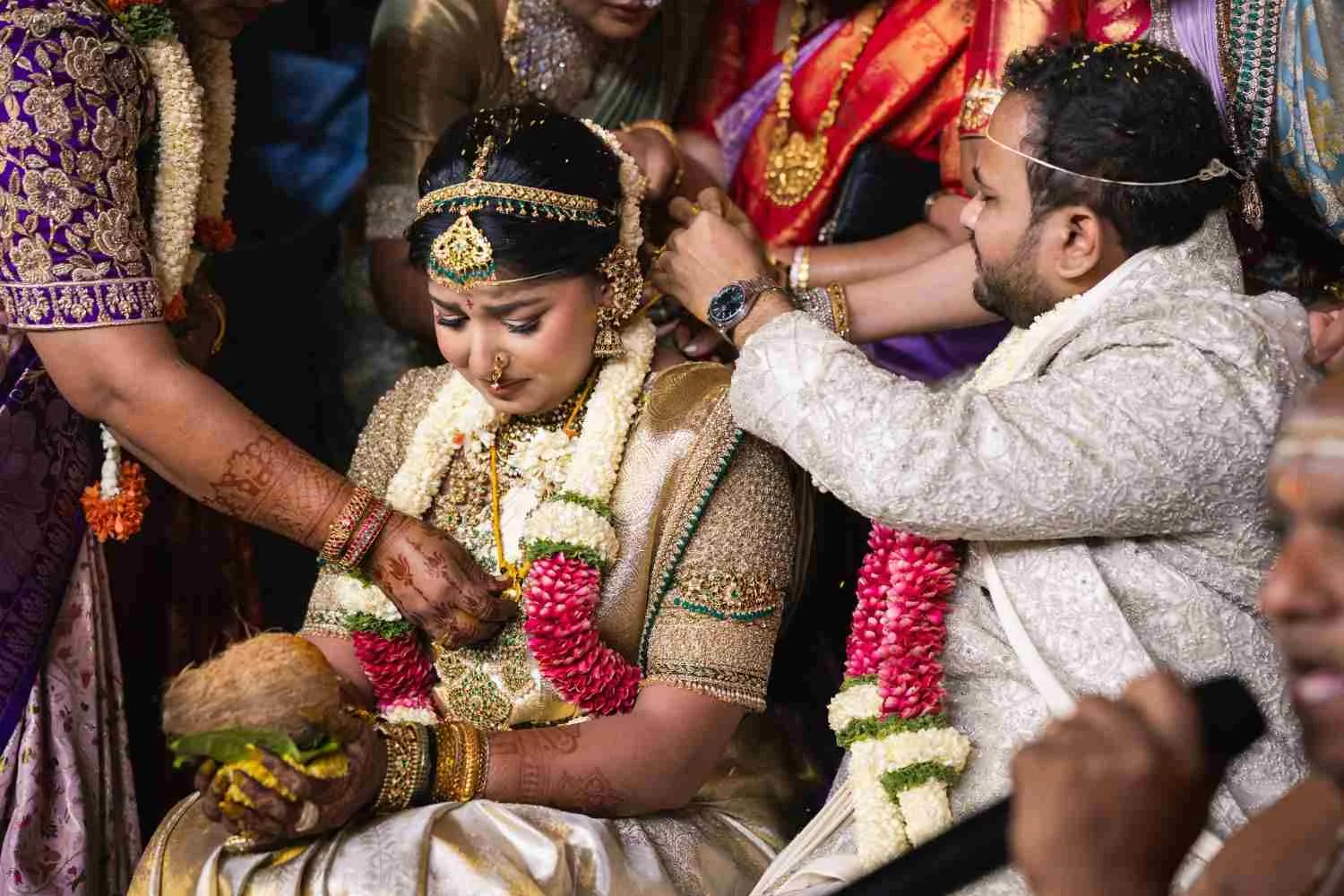
The groom ties the Mangalsutra around the bride's neck in the presence of family members, elders, and the sacred wedding rituals. The moment is often accompanied by traditional music, blessings, and celebrations.
For the families witnessing this occasion, it marks the beginning of a new relationship and the coming together of two families.
What makes this tradition beautiful is that the Mangalsutra becomes more than an ornament. It carries the memories of a wedding day and the emotions associated with the promises made during it.
What Is the Significance of the Three Knots?
One of the most interesting aspects of Mangalsutra tying is the three knots.
In several Hindu wedding traditions, the groom ties the Mangalsutra around the bride's neck using three knots. While the specific interpretations differ across communities, the three knots are commonly associated with commitment, togetherness, and the responsibilities of married life.
Here is a closer look at their symbolic significance.
1. The First Knot: A Promise Between Two Souls
The first knot represents the union of the bride and groom.
It symbolises their commitment to one another and their willingness to begin a shared journey. From this moment, they accept each other as life partners and promise to build a relationship based on love, trust, and mutual respect.
It reminds the couple that marriage is not just about sharing happiness but also about standing together through life's challenges.
2. The Second Knot: A Bond Between Two Families
The second knot is often associated with the coming together of two families.
In Indian weddings, marriage is traditionally viewed as more than a relationship between two individuals. It also brings families, traditions, and generations together.
This knot symbolises the importance of family relationships, mutual respect, and the support system that surrounds the couple.
It represents the understanding that marriage creates new bonds and strengthens existing relationships.
3. The Third Knot: A Promise of Lifelong Togetherness
The third knot represents the commitment to nurture the marital bond throughout life.
It is commonly associated with lasting companionship, shared responsibilities, and the intention to remain together through different stages of life.
It reminds the couple that a successful marriage requires patience, understanding, and continuous effort.
Together, the three knots represent a beautiful promise: to build a life where love, respect, and commitment remain at the centre.
An important cultural note: These interpretations are popular symbolic explanations rather than one universally prescribed meaning. The exact symbolism and the people who tie the knots can vary according to regional customs and family traditions.
Why Does the Mangalsutra Look Different Across India?
One of the beautiful aspects of Indian wedding traditions is how a single ritual can have different expressions across regions.
The Mangalsutra is no exception. Its design, materials, colours, and patterns reflect the cultural identity of different communities.
In many South Indian weddings, the sacred Mangalya or Thaali is a central part of the ceremony. In Tamil traditions, it is commonly known as Thaali or Thirumangalyam, while in Kannada traditions, it is often referred to as Mangalya.
In Maharashtra, the Mangalsutra traditionally features black beads arranged around gold elements. In North Indian communities, designs often include black and gold beads with decorative pendants.
Some designs are simple and traditional, while others incorporate intricate goldwork and contemporary styles.
These differences remind us that Indian wedding jewellery is not just about appearance. It carries cultural identity, family traditions, and generations of craftsmanship.
The Mangalsutra: More Than Just a Wedding Ornament
Over the years, the Mangalsutra has evolved in design and styling. Today, many women choose contemporary versions that complement their personal preferences while retaining the traditional significance of the ornament.
Some prefer elaborate gold designs, while others choose minimal everyday pieces. Regardless of the style, the emotional connection associated with the Mangalsutra remains important to many families.
What makes this tradition meaningful is not the cost, size, or design of the jewellery but the sentiment it represents.
It is a reminder of a special day, the people who witnessed it, and the promises that began a new chapter.
Capturing the Moment That Changes Everything
Every wedding has moments that stay with us forever. The tying of the Mangalsutra is undoubtedly one of them.
The anticipation in the bride's eyes, the groom's careful hands, the blessings of elders, and the happiness of family members create a moment filled with emotion.
For a wedding photographer, capturing this ritual requires more than simply photographing the ceremony. It means understanding the significance of the moment and recognising the little emotions that make it unforgettable.
At Minchu, our legacy of 17 years has been built around preserving these meaningful wedding stories. From traditional rituals to spontaneous celebrations, we believe every frame should reflect the emotions and beauty of the occasion.
Because some moments are more than just photographs. They become award-winning moments in a family's collection of memories, cherished long after the wedding celebrations are over.
Finding the best photographer is therefore about finding someone who understands your traditions, respects their significance, and captures the story behind every frame.
Three Knots, A Lifetime of Memories
The Mangalsutra may be a small part of a wedding ceremony, but the promise it represents is much bigger. Three knots bring together love, commitment, family, and companionship in one meaningful tradition.
Years later, when couples look back at their wedding photographs, that moment becomes a beautiful reminder of where their journey began.
At Minchu, we believe every tradition has a story, and every story deserves to be remembered.