How Light Actually Works in Wedding Photography
Photographers talk about light so much that it can start to sound like mysticism. The truth is more practical than mystical, but it is also genuinely the thing that separates photographs that take your breath away from photographs that are merely competent. Wedding photography lighting is not a single technique or a piece of equipment. It is a set of observations and decisions made continuously throughout the day, often in seconds, in response to whatever environment the photographer finds themselves in.
Understanding the basics of how light behaves at different times of day, in different indoor environments, and under different weather conditions will help you plan your wedding day in ways that give your photographer the best possible material to work with.
The Morning Light and Why the Getting-Ready Period Matters
The getting-ready phase of a wedding is often treated as a logistical preamble to the real event. From a photography standpoint, it is one of the richest opportunities of the entire day. The emotions present during preparation are intimate and unguarded in a way that is very different from anything that happens in public during the ceremony or reception. The challenge is almost always the room the couple is given to get ready in, and specifically its lighting.
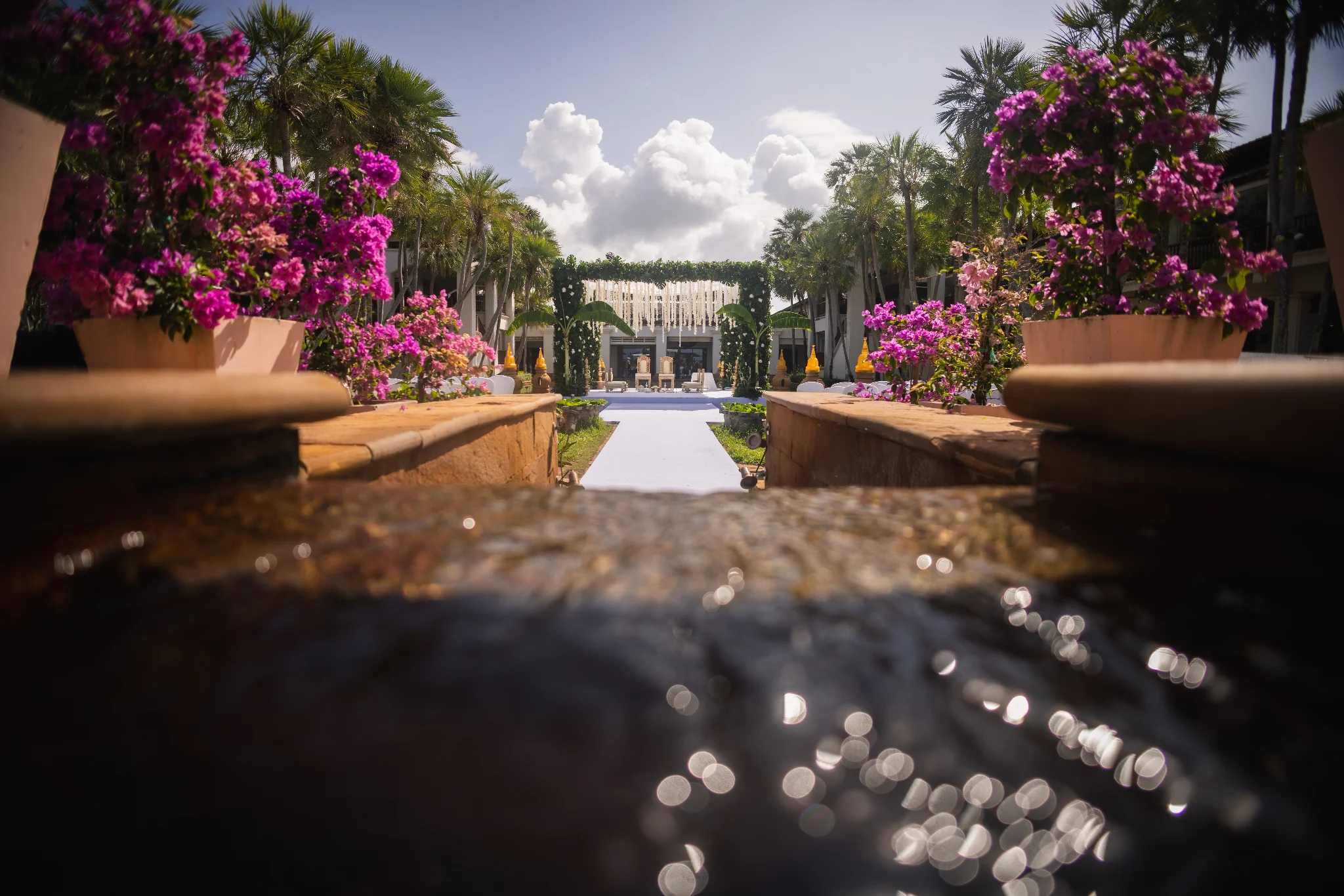
Hotels and wedding venues tend to use artificial overhead lighting in dressing rooms that is unflattering, colour-inconsistent, and impossible to use for meaningful portrait photography. The single most impactful thing a bride can do to improve her getting-ready photographs is to request a room with large windows facing east or north, providing clean natural light, and to position herself near those windows when the photographer arrives. Morning window light is extraordinarily beautiful. A bride sitting near a large east-facing window at nine in the morning, having her jewellery put on or her hair arranged, with soft natural light falling across her face, does not require any additional lighting whatsoever. Browse our wedding portfolio to see how dramatically different getting-ready photographs look with good window light versus artificial room lighting.
Midday, Shade, and the Art of Working Around Bad Light
Midday sun is genuinely difficult light for portrait photography. It falls from directly above, creating deep shadows beneath eyebrows, nose, and chin that are unflattering on virtually every face. It is also intense enough to cause squinting, which closes the eyes and prevents genuine expression. When ceremony or portrait schedules require working in midday light outdoors, the solution is usually found in open shade rather than direct sun.
Open shade means the shadow side of a building, the coverage of a large mature tree, or a covered corridor or veranda. In open shade, the light source becomes the bright open sky rather than the direct sun, which is much softer and more even. The challenge is that open shade can sometimes produce a slightly blue colour cast, particularly in full shadow, but this is easily corrected in editing. The other option for midday outdoor work is using a reflector or fill flash to soften the shadows created by overhead sun, which adds a small amount of light from the front that fills in the darkest areas of the face without making the image look artificially lit. For technical reading on wedding photography lighting, Photography Life offers thorough guides that go deeper into the mechanics. Our own blog covers more of the planning and experiential side.
Indoor Ceremony and Reception Lighting
Many South Indian weddings take place indoors, in temple halls, community venues, or hotel banquet rooms that were not designed with photography in mind. The lighting in these spaces is often a mixture of sources at different colour temperatures, including warm tungsten chandeliers, cool fluorescent ceiling panels, and coloured uplighting or stage lighting. Managing this combination while producing images that look natural and emotionally true is one of the more technically demanding aspects of professional wedding photography lighting.
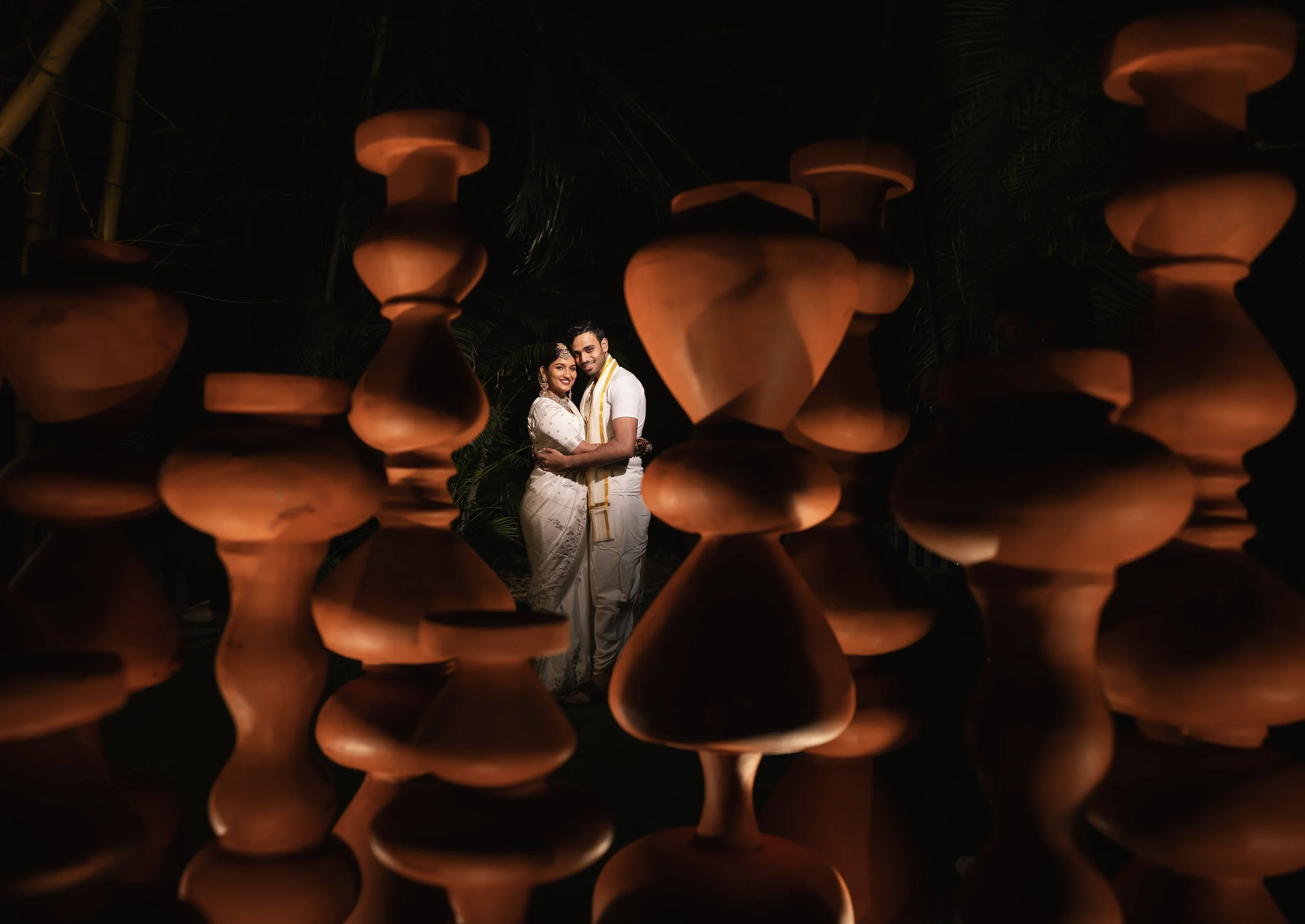
Modern cameras are significantly better at handling mixed lighting than they were even five years ago, but the photographer's approach still matters enormously. We typically aim to identify the dominant light source in any given part of the venue, balance our camera settings to that source, and use supplementary flash where needed to fill shadows or add a small amount of directional light to faces. For reception events in the evening, off-camera flash positioned to the side of the couple creates a quality of light that is warm, directional, and close to what good window light produces, which is why it tends to look natural rather than flash-lit in the final images.
Why Planning Your Day Around the Light Is Worth the Effort
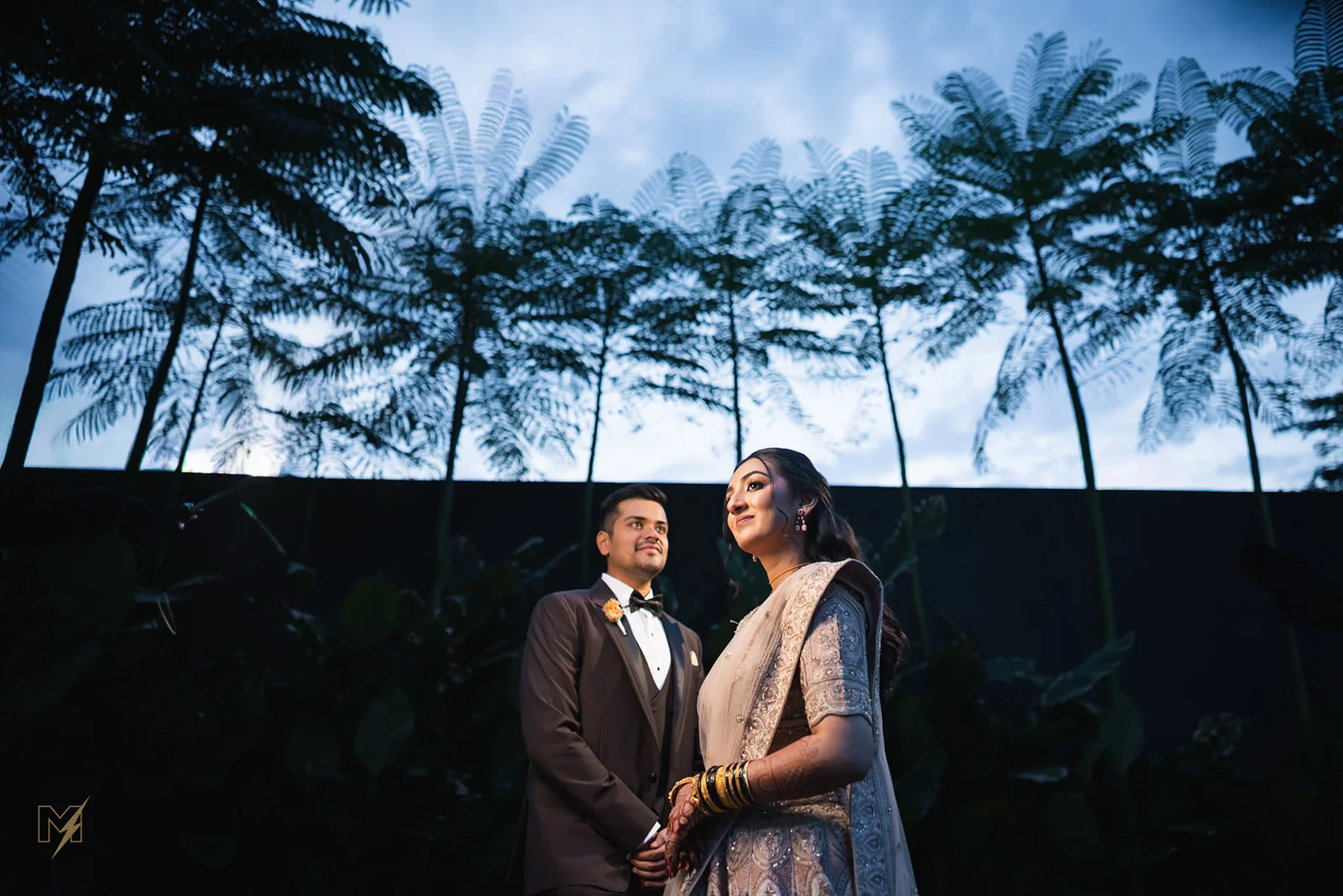
The single most impactful thing a couple can do for their wedding photography lighting does not involve any technical knowledge at all. It involves building the wedding day timeline around the available light rather than treating photography as something that will happen in whatever time is left over. Specifically, it means scheduling couple portraits during the golden hour before sunset, regardless of what else is happening in the programme at that time.
Twenty minutes during the golden hour, away from the reception, produces images that twenty hours of midday coverage cannot. The quality difference is that dramatic. We always work with couples and planners to build this window into the day explicitly, usually during the cocktail hour when guests are engaged and entertained without the couple being needed. The investment of a brief absence from the reception pays back in photographs you will still be looking at thirty years from now with the same feeling of wonder. Talk to us about how we approach light and timing planning for your specific venue and wedding date, and read our complete guide to golden hour wedding photography for everything you need to know about that specific window of light.