Golden Hour Wedding Photography: What It Is and Why Nothing Else Compares
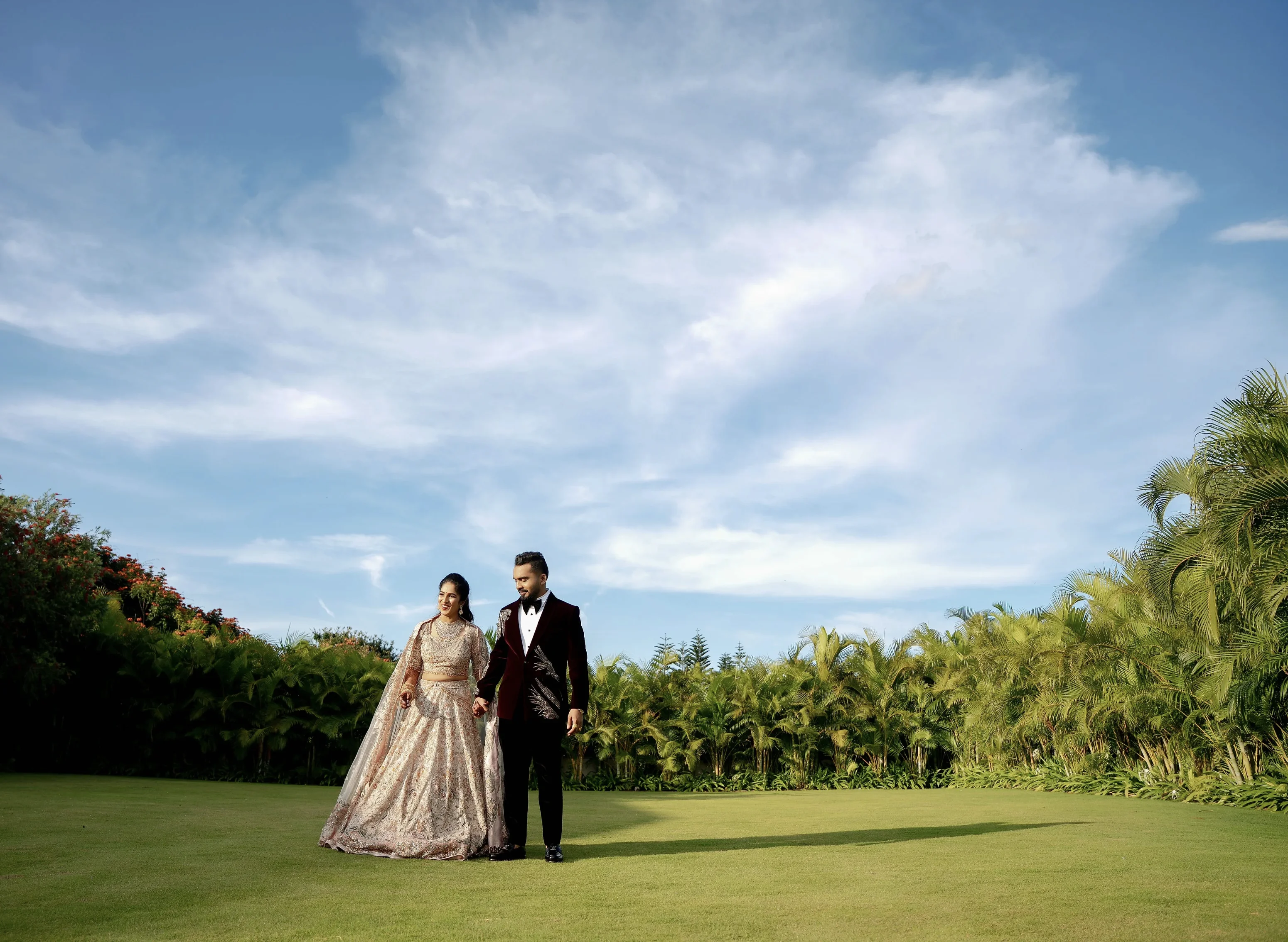
we can describe the feeling of golden hour wedding photography in practical terms. The sun is within an hour of the horizon. The light has travelled through a much greater thickness of atmosphere than it does at midday, and that journey has stripped out most of the harsh blue wavelengths, leaving primarily the warm reds, oranges, and golds. The light falls at a low, nearly horizontal angle, which means it wraps around the sides of faces and bodies rather than pressing down from above. The shadows are long and soft. Everything the light touches seems to glow with a warmth that does not exist at any other time of day.
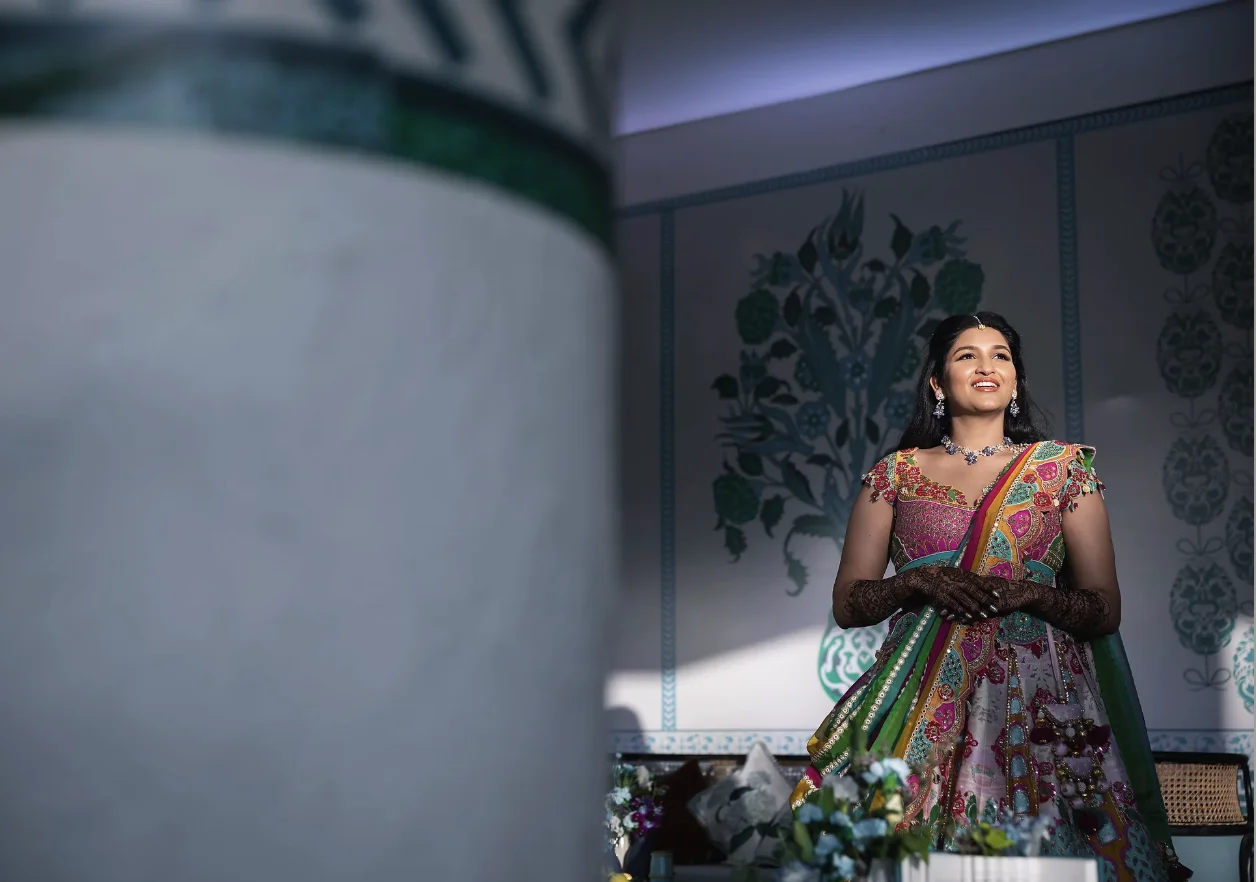
But the real quality of this light is almost impossible to fully describe until you see it in a photograph. When a couple stands in that light, when the warmth of it catches the detail of an embroidered outfit or the side of a face turned slightly toward the sun, the resulting image carries a feeling of romance and beauty that no studio lighting setup and no editing technique can faithfully replicate. It is simply better, and it is free, and it arrives for roughly forty minutes every single day.
Why Twenty Minutes in This Light Is Worth an Hour Anywhere Else
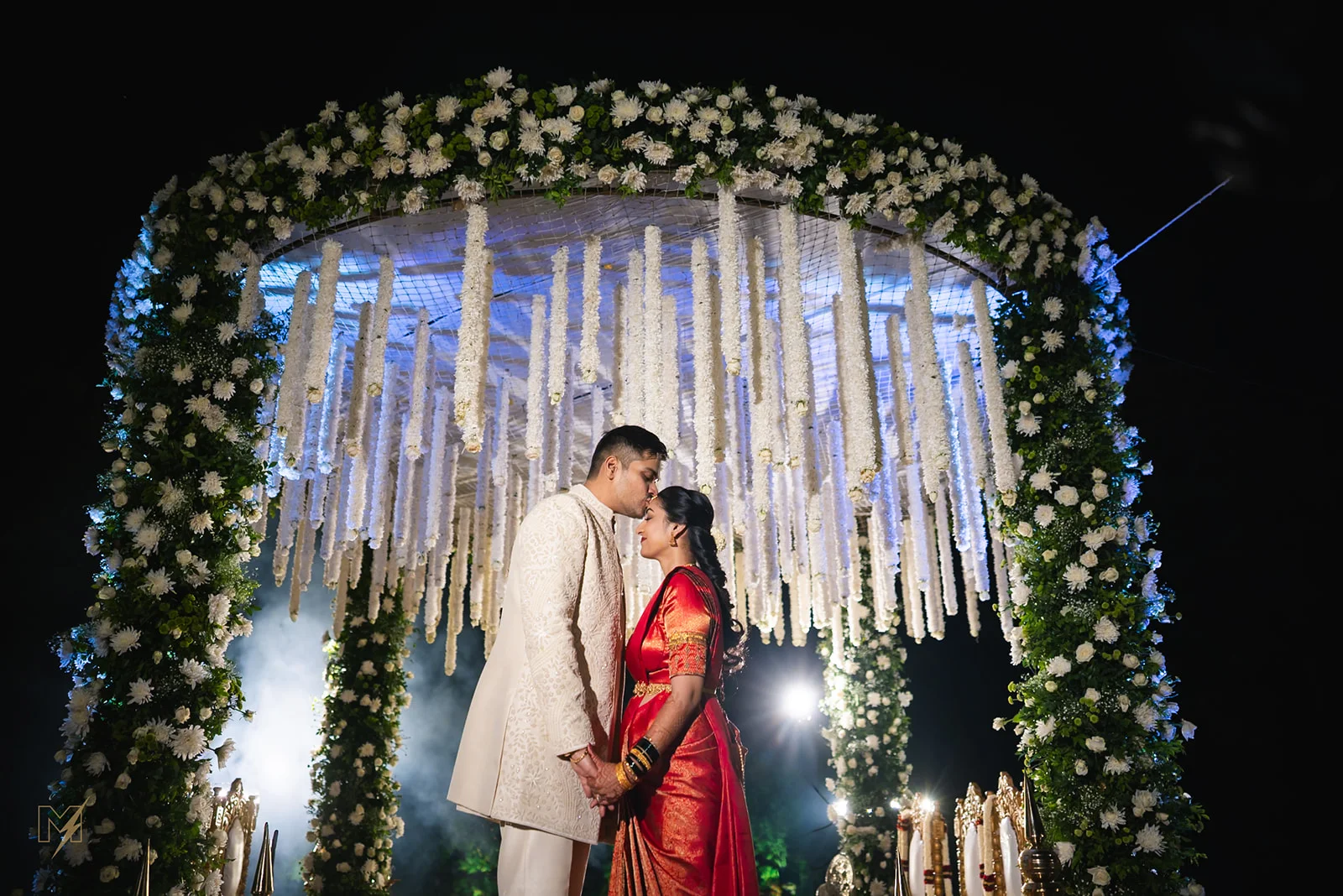
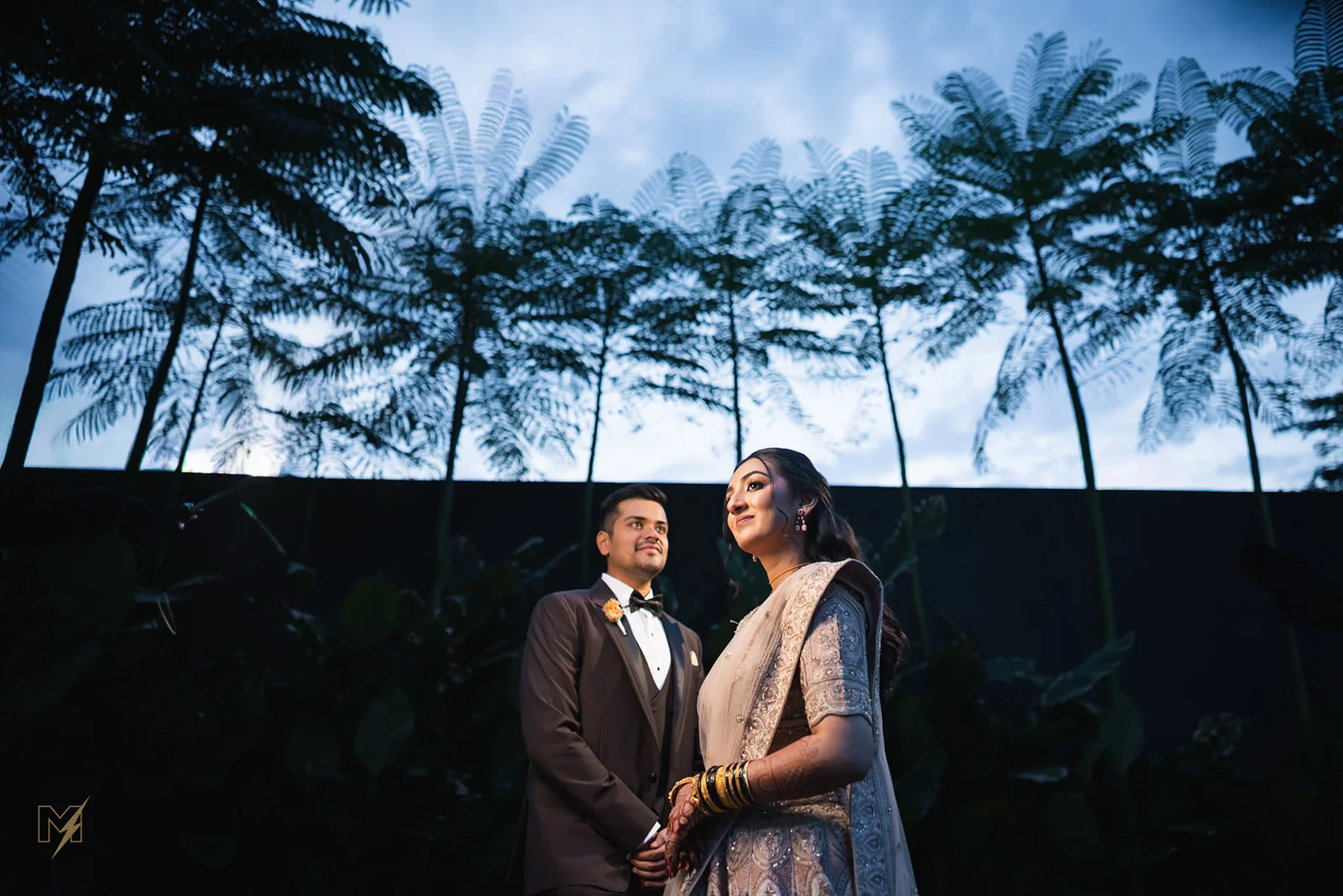
At Minchu by Sujay, we plan every outdoor couple portrait session around the golden hour window. We have photographed couples in beautiful locations at noon, at three in the afternoon, and at golden hour, and the quality difference between the images from those three sessions is not subtle. It is the difference between a competent, nicely composed portrait and an image that makes people catch their breath when they see it.
The reason most photographers talk about this so consistently is not because it is fashionable advice. It is because the physics of it are real and the results are consistent. A couple standing in a field at noon produces images that require significant effort to make flattering. The same couple in the same field at golden hour produces images where the light is doing almost all of the work. The photographer's job in those conditions is mainly to be in the right position, not to fight the environment. View our golden hour wedding portfolio to see what this light actually produces across different venues, different seasons, and different wedding styles.
There is also a quality to the emotional experience of a golden hour portrait session that shows up in the photographs. The light is so beautiful that couples almost always feel it even without being told what it is. There is a warmth, literally and metaphorically, in being bathed in that late afternoon sun. Couples tend to relax into each other more naturally. Laughter comes more easily. The images carry a genuine ease and joy that is very difficult to manufacture in less flattering conditions.
How to Build Golden Hour Into Your Wedding Day
The most common reason couples miss their golden hour wedding photography window is not bad luck. It is a wedding day timeline that was never built around it. The golden hour arrives at the same time regardless of what is on your schedule. If your reception dinner is starting at seven and the sun sets at six-thirty, the timing works naturally. If your dinner is starting at six and the sun sets at seven, you need to plan explicitly for a brief departure from the celebration to photograph during that window.
The practical approach is a fifteen to twenty minute break during the cocktail hour, which typically precedes the main reception in most Indian wedding formats. Guests are already engaged and entertained. The couple slips away with the photographer to wherever the best light will be, does the portrait session, and returns. By the time dinner begins, you have the most beautiful photographs of your lives. Communicate this plan to your wedding planner, your reception host, and any family members who might be confused or concerned by the couple's brief absence.
Use a reliable source to find the precise sunset time for your wedding date and location. The Time and Date sun calculator is accurate and easy to use. Share this with your photographer and planner at least three weeks before the wedding so the timeline can be built around it explicitly. For visual inspiration from golden hour wedding photography from around the world, Junebug Weddings curates beautiful examples that give a real sense of what different types of golden light produce in different landscapes. Our own photography blog has more on lighting and planning.
The Technical Details That Make the Difference
For the technically curious: golden hour wedding photography requires specific camera settings and lens choices that are different from what works well in midday or indoor conditions. The light drops quickly as the sun approaches and then crosses the horizon, which means aperture, shutter speed, and ISO adjustments happen continuously throughout the session. A photographer who is comfortable with manual exposure control rather than relying on automatic modes produces much more consistent results during this rapidly changing window.
Wide aperture prime lenses, typically 50mm or 85mm at f/1.4 to f/2.0, are particularly well suited to golden hour portrait work. They gather maximum light from the dimming sky, allow a shutter speed fast enough to freeze natural motion, and produce a shallow depth of field that places the couple in sharp focus against a beautifully blurred background warm with the colours of the evening sky. This combination of warm light, wide aperture blur, and directional rim lighting is the technical recipe behind most of the golden hour photographs you have ever admired.
Backlighting, where the couple stands between the photographer and the setting sun, is one of the most beautiful techniques available during the golden hour. The sunlight wraps around the edges of the couple as a warm rim of light while the faces are lit by the open sky in front of them. Managing this exposure requires experience and often a small amount of fill light from a reflector or subtle off-camera flash, but when it is done well it produces images of such genuine beauty that they consistently become the most shared and most treasured photographs from the entire wedding day. Contact us to talk about how we plan golden hour coverage for your specific venue and date, and read our guide on how light actually works in wedding photography for the broader context of lighting decisions throughout the day.