The Temple Jewellery Story: Heritage Behind Traditional Bridal Ornaments
Some ornaments are worn to complete an outfit, while others carry stories that have travelled through generations. Temple jewellery belongs to the latter. With intricate carvings, divine motifs, and antique inspired gold designs, these ornaments bring together art, devotion, and cultural heritage.
A traditional South Indian bride wearing temple jewellery is not simply adorning herself with gold. She is carrying a piece of history, where every design reflects the craftsmanship and traditions of an earlier era.
But where did temple jewellery originate? Why does it feature images of deities and intricate temple inspired patterns? And how did these ornaments become an essential part of traditional bridal attire?
Let's explore the fascinating story behind these timeless treasures.
Where Did Temple Jewellery Originate?
The story of temple jewellery is deeply connected to the temples of South India.
Historically, jewellery was crafted to adorn temple deities, with goldsmiths creating elaborate ornaments featuring religious symbols, floral patterns, and intricate carvings. These pieces were designed with remarkable attention to detail, reflecting the artistic traditions and devotion associated with temple culture.
Over time, temple jewellery also became closely associated with classical dance traditions, particularly Bharatanatyam. Dancers wore these ornaments to complement their costumes and enhance their expressions and movements during performances.
Royal patronage and traditional craftsmanship further contributed to the development of these jewellery styles.
What began as an expression of devotion and artistic excellence gradually became an important part of South Indian cultural adornment. Today, temple jewellery holds a special place in traditional bridal styling, especially in Tamil Nadu, Karnataka, Andhra Pradesh, and Kerala.
What Makes Temple Jewellery So Special?
Unlike contemporary jewellery that often focuses on minimal designs and modern finishes, traditional temple jewellery is recognised for its detailed craftsmanship and cultural symbolism.
Its beauty lies in the little details that make every piece distinctive.
1. Divine Motifs
One of the most recognisable features of temple jewellery is its use of religious and traditional motifs. Designs often feature Goddess Lakshmi, Lord Ganesha, peacocks, lotus flowers, and other symbolic elements.
These motifs reflect the influence of temple art and mythology. Goddess Lakshmi, for instance, is traditionally associated with prosperity and abundance, making her image particularly popular in bridal ornaments.
2. Intricate Goldwork
Traditional temple jewellery is known for its detailed workmanship. Artisans create elaborate patterns using techniques such as repoussé, in which designs are raised on a metal surface through careful hammering.
The layered textures, engraved details, and antique inspired finishes give these ornaments their distinctive appearance.
3. Traditional Craftsmanship
Behind every elaborate temple necklace or pair of earrings is the skill of artisans who preserve traditional jewellery making techniques.
The craftsmanship requires patience, precision, and an understanding of traditional motifs. Even a small pendant can feature multiple layers of detailing, making each ornament a piece of wearable art.
Popular Temple Jewellery Worn by South Indian Brides
A traditional bridal jewellery collection is often made up of several ornaments, each adding its own character to the overall look.
Here are some of the most popular pieces.
1. Temple Necklaces and Haram
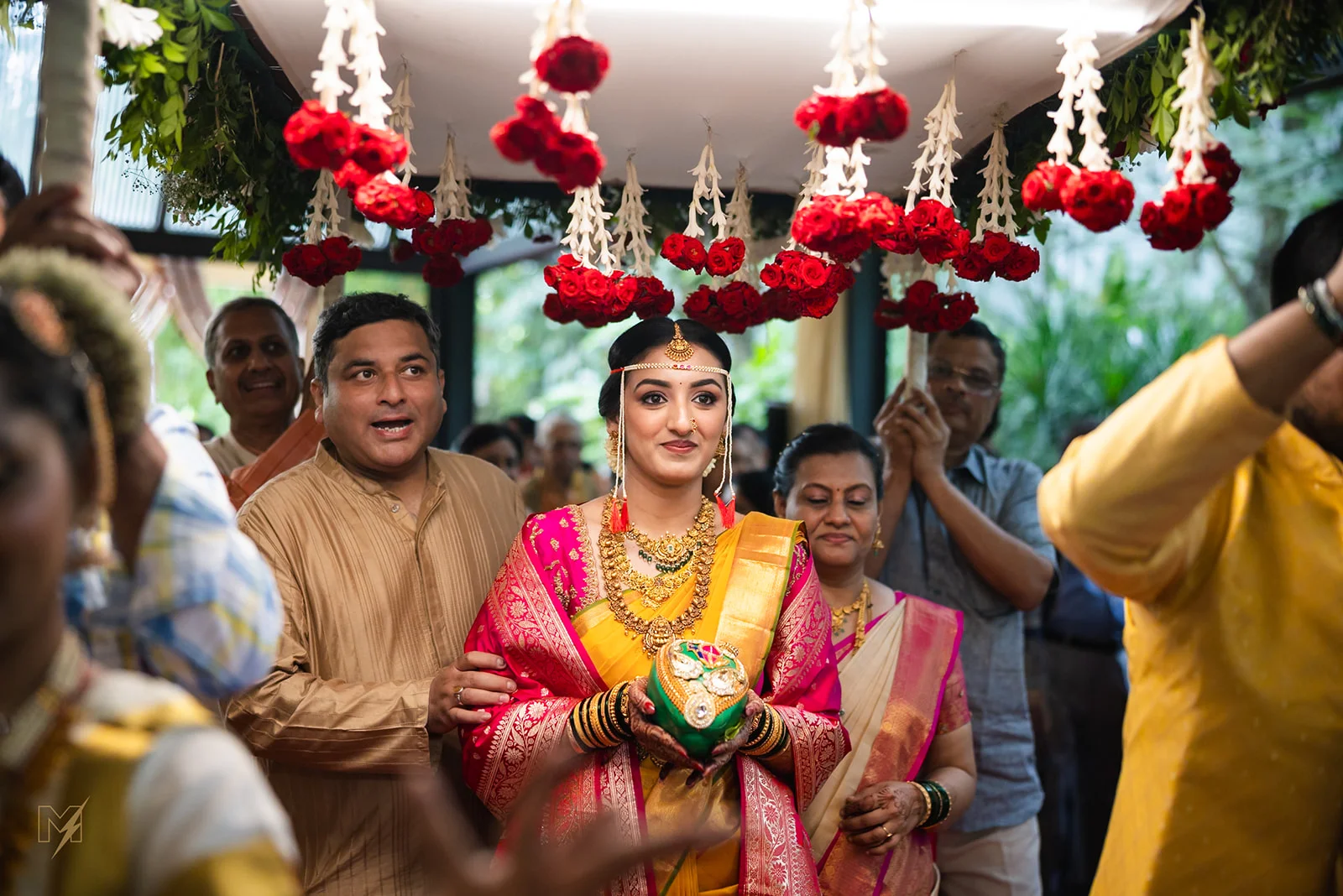
Temple necklaces are among the most striking elements of traditional bridal jewellery. They often feature Goddess Lakshmi pendants, intricate floral designs, and elaborate gold detailing.
Long harams are commonly layered with shorter necklaces to create a rich and traditional bridal appearance.
2. Jhumkas
Temple jhumkas are traditional bell shaped earrings decorated with deity motifs, floral carvings, and hanging gold elements. They frame the bride's face beautifully and complement traditional hairstyles.
3. Vanki (Armlet)
The Vanki is a traditional armlet worn on the upper arm. Often designed in a distinctive V shape, it features intricate patterns and sometimes includes peacock or deity motifs.
It adds a graceful traditional touch to the bride's overall appearance.
4. Vaddanam (Waist Belt)
The Vaddanam is a decorative gold waist belt worn around the waist, usually over the bridal saree. It often features elaborate carvings and traditional motifs.
Apart from completing the bridal look, it is also associated with traditional South Indian wedding attire.
5. Papidi Billa (forehead pendant)
Worn along the centre parting of the hair, the Papidi Billa is an important element of traditional bridal adornment. Its designs often include floral patterns, precious stones, and intricate goldwork.
6. Bangles and Other Ornaments
Traditional temple bangles, rings, and necklaces complete the bridal jewellery collection. Depending on regional customs and personal preferences, brides may also wear traditional nose ornaments and other accessories.
Together, these pieces create a bridal look that celebrates cultural heritage and craftsmanship.
Why Is Temple Jewellery Important in South Indian Weddings?
In South Indian wedding traditions, jewellery is often more than an accessory. It represents family heritage, cultural identity, and the significance of special occasions.
Temple jewellery, in particular, carries an artistic connection to religious traditions and classical dance.
For many families, bridal ornaments are carefully selected, preserved, and sometimes passed down through generations.
A necklace worn by a mother or grandmother may become one of the most meaningful pieces in a bride's wedding collection.
These heirloom ornaments carry memories beyond their material value. They connect different generations through shared traditions and family stories.
This is what makes traditional bridal jewellery so special. It allows a bride to celebrate her own beginning while remaining connected to the heritage that came before her.
How Modern Brides Are Embracing Temple Jewellery
While traditional designs continue to remain popular, modern brides are finding new ways to style temple jewellery.
Some prefer a complete traditional look with layered necklaces, statement earrings, and an elaborate waist belt. Others choose a single statement piece, pairing it with simpler ornaments to create a balanced appearance.
Temple jewellery is also available in different finishes, including traditional gold, antique finishes, and gold plated alternatives.
Brides are increasingly choosing designs based on their sarees, wedding ceremonies, personal style, and comfort.
Whether elaborate or minimal, these ornaments continue to prove that traditional craftsmanship can remain relevant across generations.
Capturing the Beauty of Bridal Jewellery Through Photography
A bride's wedding look is made up of countless details, and jewellery is one of the most beautiful among them.
The intricate carvings of a temple necklace, the delicate detailing of a jhumka, and the way gold ornaments complement a traditional silk saree all contribute to the beauty of the bridal look.
For a wedding photographer, these details offer opportunities to tell a richer visual story. A close up of an heirloom necklace, the bride adjusting her earrings, or the delicate arrangement of ornaments before the ceremony can become photographs filled with meaning.
At Minchu, our legacy of 17 years has taught us that wedding photography is about recognising the stories hidden within the smallest details. From traditional bridal adornments to the emotions surrounding the wedding rituals, every element deserves thoughtful attention.
Because sometimes, an award winning photograph is not just about the bride's entire look.
It is about capturing the intricate craftsmanship of an ornament that has been treasured by generations.
The right approach to award winning photography preserves these details in a way that makes them timeless. And finding the best photographer means choosing someone who understands that every part of your wedding look has a story worth remembering.
A Heritage That Never Goes Out of Style
Temple jewellery is a beautiful reminder of how art, devotion, and tradition can come together to create something timeless.
From the temples where these artistic traditions flourished to the weddings where brides proudly wear these ornaments, their journey reflects the richness of South Indian heritage.
Trends may change, designs may evolve, but the charm of traditional craftsmanship continues to remain.
Because some ornaments do more than complete a bridal look. They carry generations of stories, waiting to become a part of another beautiful beginning.
At Minchu, we believe these are the details that make wedding memories truly unforgettable!