Your Wedding Photography Album: Why It Matters More Than Your Gallery
we have photographed weddings where the couple invested substantially in their photography, received a gallery of six hundred beautifully edited images, and then left those images on a password protected online link for three years without printing a single one. The gallery expired. The download password stopped working. The images were not gone but they were inaccessible in a way that felt indistinguishable from lost. The only thing that would have guaranteed that those photographs survived, and remained accessible for decades to come, was a physical wedding photography album.
A printed album is not a sentimental extravagance. It is the most practical form of long term image storage available to you. Hard drives fail. Cloud services change their terms or their pricing. Links expire. Paper, held together with archival materials and good bookbinding, survives at a scale that digital storage cannot reliably match for the timescales we are talking about when we talk about wedding photographs.
What Separates a Real Album From a Photo Book
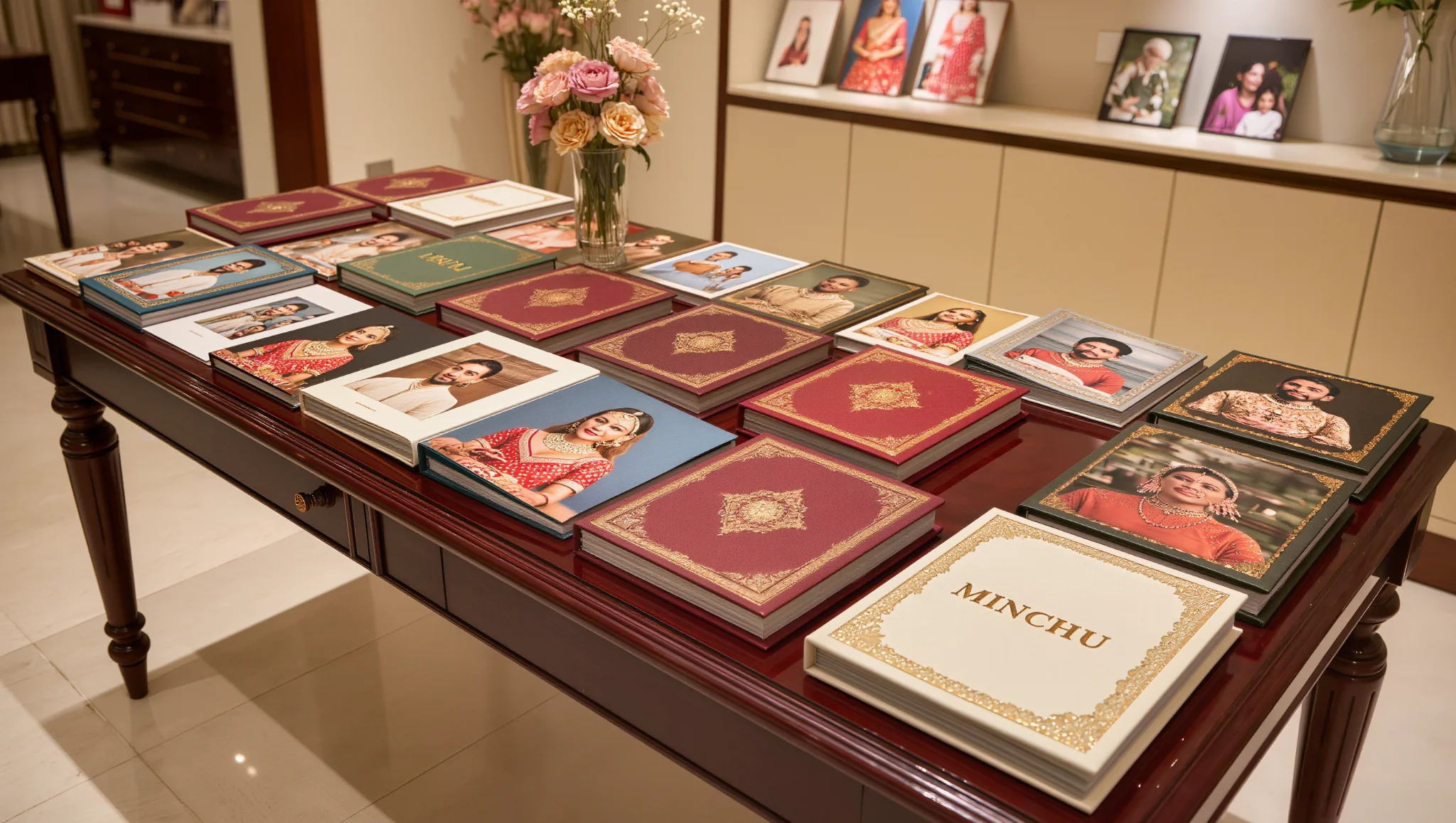
The term wedding photography album covers a wide range of products, and the differences between them matter enormously. At the lower end of the market are digital print-on-demand photo books, often offered by consumer services and printed on regular paper. These are inexpensive, relatively quick to produce, and tend to show their age within ten to fifteen years as the paper yellows and the printing fades. They are fine for everyday family photograph collections but they are not appropriate for the most important photographs of your life.
At the professional end of the market are flush-mount lay-flat albums, printed on true photographic paper, mounted to rigid thick pages that open completely flat without a gutter. The physical construction of these albums allows double-page images to spread across both pages without any part of the image disappearing into the binding. The visual impact of a single photograph spread across forty centimetres of high-quality print, seen for the first time when you open a new album, is something that no screen can replicate. These albums, made with genuine leather or linen covers and archival inner materials, will look as beautiful in forty years as they do today. Browse our wedding portfolio to understand the kind of imagery that goes into these albums before committing to a design conversation.
How to Choose the Right Photos for Your Wedding Photography Album
The editing process for a wedding photography album, choosing which eighty or one hundred images will go into the book from a gallery that might contain six hundred or more, is emotionally harder than most couples anticipate. Every image has a reason to be there. Every excluded image is a moment that will not appear in the physical record of your wedding. The temptation is to include everything significant and the result is an album that is too full to feel considered.
The approach that works best is narrative rather than inclusive. Think of the album as a short film of your day rather than as a comprehensive archive. A film needs pacing. It needs visual rhythm. It needs moments of quietness as well as moments of drama. Select images that represent each chapter of the day clearly and move from one chapter to the next with intention. The getting-ready period might need twelve images. The ceremony might need twenty. The family portraits might need eight or ten carefully chosen frames. The reception and dancing might need fifteen. The couple portraits can anchor the album at whatever point in the sequence they appear most naturally.
Remove any image that duplicates what another image has already said. If you have three similar frames of the same moment, choose the best one and let the others live in the digital gallery. The album should never feel redundant, and the discipline of tight editing makes every included image feel more significant. For examples of how excellent album curation looks in practice, The Knot's album guide and WeddingWire are useful references. Our blog has more on the philosophy behind the decisions we make in creating meaningful wedding imagery.
Caring for Your Album and Thinking About the Future
A high quality wedding photography album requires very little maintenance beyond sensible storage. Keep it away from direct sunlight, which degrades photographic paper and weakens binding materials over time. Store it in a cool dry environment rather than a humid cupboard or an attic prone to temperature extremes. Handle the pages with clean dry hands to prevent the natural oils in skin from transferring to the paper surface over many years of use. Many couples keep the album in its original presentation box when it is not being looked at, which offers a small additional layer of protection from dust and accidental damage.
Consider ordering parent albums at the time of your initial album order. Having additional copies of the album, or smaller version albums, distributed to immediate family members on both sides significantly reduces the risk of your visual record being concentrated in a single location. It also means that your parents and in-laws have a physical wedding album of their own to share with visitors and to keep on their shelves, which matters more to older generations than any digital gallery or social media share.
The wedding photography album is not the most glamorous purchase associated with your wedding. But it is almost certainly the one that will feel most significant when you are sitting with your children or grandchildren twenty years from now and opening it together for the first time in years. Make it worthy of that moment. Contact us to discuss album options and design with our team, and read our guide on candid wedding photography to understand what makes the images that fill the best albums so memorable.